
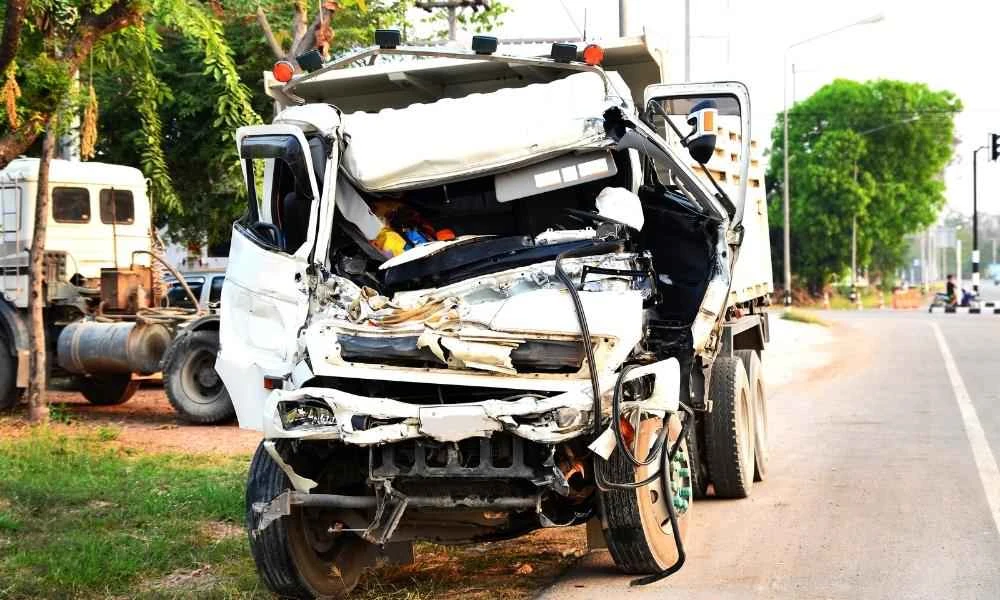
When a fully loaded commercial vehicle weighing 80,000 pounds collides with a passenger car, the results are rarely minor. An 18-wheeler crash produces some of the most catastrophic injuries seen on American highways – and some of the most complicated liability questions. Victims often assume the truck driver is the only responsible party, but in reality, a truck accident claim can involve multiple defendants, several insurance policies, and a web of federal regulations. So who actually pays: the driver, or the trucking company?
When Is the Truck Driver Personally Liable?
Truck drivers are liable when their own negligence causes the crash. Common examples include speeding, distracted driving, impaired driving, following too closely, and improper lane changes. Driver fatigue deserves special attention: federal hours-of-service rules limit how long a trucker can drive without rest, yet delivery pressure pushes many drivers past legal limits. Falsified logbooks and skipped rest breaks are frequent findings in serious crash investigations.
Proving driver negligence requires evidence that disappears quickly. Electronic logging devices, black box data (the truck’s event data recorder), dashcam footage, cell phone records, and post-crash drug and alcohol testing can all show exactly what the driver was doing in the seconds before impact – but only if that evidence is preserved before the trucking company’s rapid-response team gets to it first.
When Is the Trucking Company Responsible?
Trucking company liability arises in two major ways. First, under the doctrine of vicarious liability, an employer is legally responsible for the negligent acts of its employees committed within the scope of their employment. If the driver was hauling freight for the company when the crash occurred, the company generally answers for the driver’s negligence.
Second, trucking companies can be directly negligent themselves. Examples include:
- Negligent hiring – putting a driver with a history of violations or failed drug tests behind the wheel
- Inadequate training and supervision – failing to train drivers on safety procedures
- Poor maintenance – skipping brake inspections, tire replacements, and required repairs
- Pressure to violate hours-of-service rules – scheduling deliveries that force drivers to break FMCSA regulations
Beyond the motor carrier, other parties may share fault: a shipper responsible for negligent cargo loading, a maintenance contractor that botched repairs, a parts manufacturer that produced defective brakes, or even a government entity responsible for a dangerous roadway – a topic explored in detail in this guide on whether you can sue the government for road defects.
Why Do FMCSA Regulations Matter to Your Claim?
The Federal Motor Carrier Safety Administration governs nearly every aspect of interstate trucking – driver qualifications, drug testing, hours of service, vehicle inspections, weight limits, and insurance minimums. When an investigation reveals that a carrier or driver violated FMCSA regulations, those violations become powerful evidence of negligence. In some cases they support punitive damages, which punish companies that put profits ahead of public safety.
This regulatory layer is a key reason truck cases differ from ordinary car wrecks. A lawyer who doesn’t know trucking law can easily miss violations that would multiply the value of the claim.
How Do You Protect Your Rights After an 18-Wheeler Crash?
Trucking companies dispatch investigators and defense lawyers to crash scenes within hours. Victims should respond just as fast. Seek immediate medical care, avoid giving recorded statements, and contact an experienced truck accident lawyer who can send spoliation letters requiring the carrier to preserve black box data, driver logs, inspection reports, and personnel files before they are lost or destroyed.
Your attorney will also identify every liable party and every layer of insurance coverage. Because commercial policies often carry limits of $1 million or more, insurers fight these claims aggressively – and victims with catastrophic injuries cannot afford to leave coverage on the table.
Geography adds a strategic layer, too. Interstate corridors like I-10, I-20, I-65, and I-75 funnel heavy freight traffic through Alabama, Florida, Mississippi, and Georgia, and a single crash can involve a driver, carrier, and shipper from three different states. Filing deadlines vary – generally two years in Alabama, Florida, and Georgia, but three years in Mississippi – and fault rules range from Alabama’s unforgiving contributory negligence to Mississippi’s pure comparative fault. Where suit is filed can meaningfully change both the applicable law and the value of the case, which is why experienced trucking counsel evaluates venue options before filing.
What Damages Can Truck Accident Victims Recover?
Because of the sheer forces involved, damages in an 18-wheeler crash case tend to be substantial. Victims can pursue past and future medical expenses, lost income and diminished earning capacity, property damage, and non-economic losses such as pain and suffering, disfigurement, and loss of enjoyment of life. When a family member is killed, wrongful death damages become available to the survivors. Where the evidence shows conscious disregard for safety – a carrier that forced drivers past hours-of-service limits, ignored failed inspections, or hired a driver with a known substance problem – punitive damages may be awarded to punish the company and deter the industry. Calculating these damages accurately requires medical experts, economists, and vocational specialists, particularly in catastrophic injuries cases where lifetime care costs must be projected decades into the future. Settling before that analysis is complete almost guarantees leaving money on the table.
Final Thoughts
Liability in a truck accident is rarely limited to the person holding the steering wheel. Through vicarious liability, direct corporate negligence, and violations of FMCSA regulations, the trucking company – along with shippers, maintenance providers, and manufacturers – may all owe compensation to the injured. The key is acting quickly to preserve evidence and retaining counsel who knows how the trucking industry defends these cases. When the playing field is leveled, victims of an 18-wheeler crash can recover the full measure of damages the law allows.